 iOS & AndroidLearn with the taxi appAll questions for the taxi theory testStart learning
Taxi theory test · Study guide
Learn taxi theory
Anyone who drives a taxi professionally may not work and drive for as long as they like. There are clear rules on how long you may be behind the wheel, when you have to take a break and how much rest you need – set out in the ARV 2 (the ordinance on working and rest periods). This study guide explains them step by step and in plain language.
Three areas are central: the difference between self-employed and employed taxi drivers, the working, driving and rest periods and monitoring with the tachograph.
The 3 topics
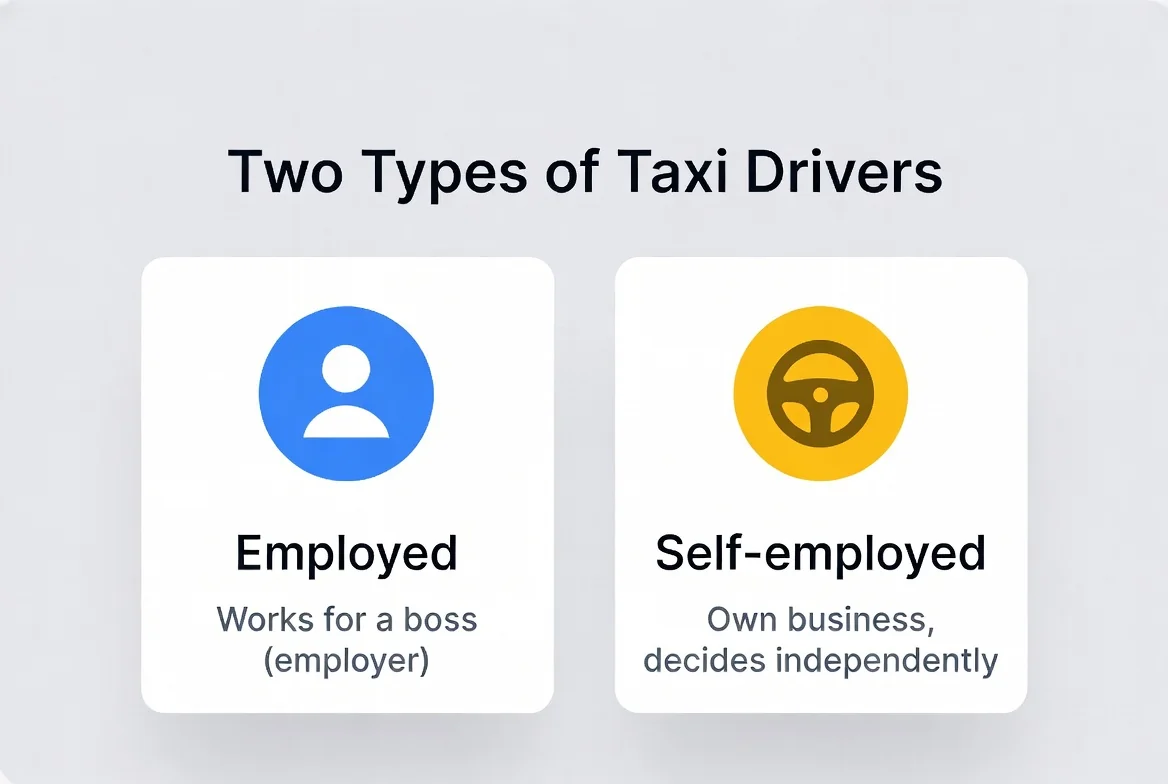
Self-employed or employed
The two types of driver, working time vs. driving time, rest days and the comparison table.
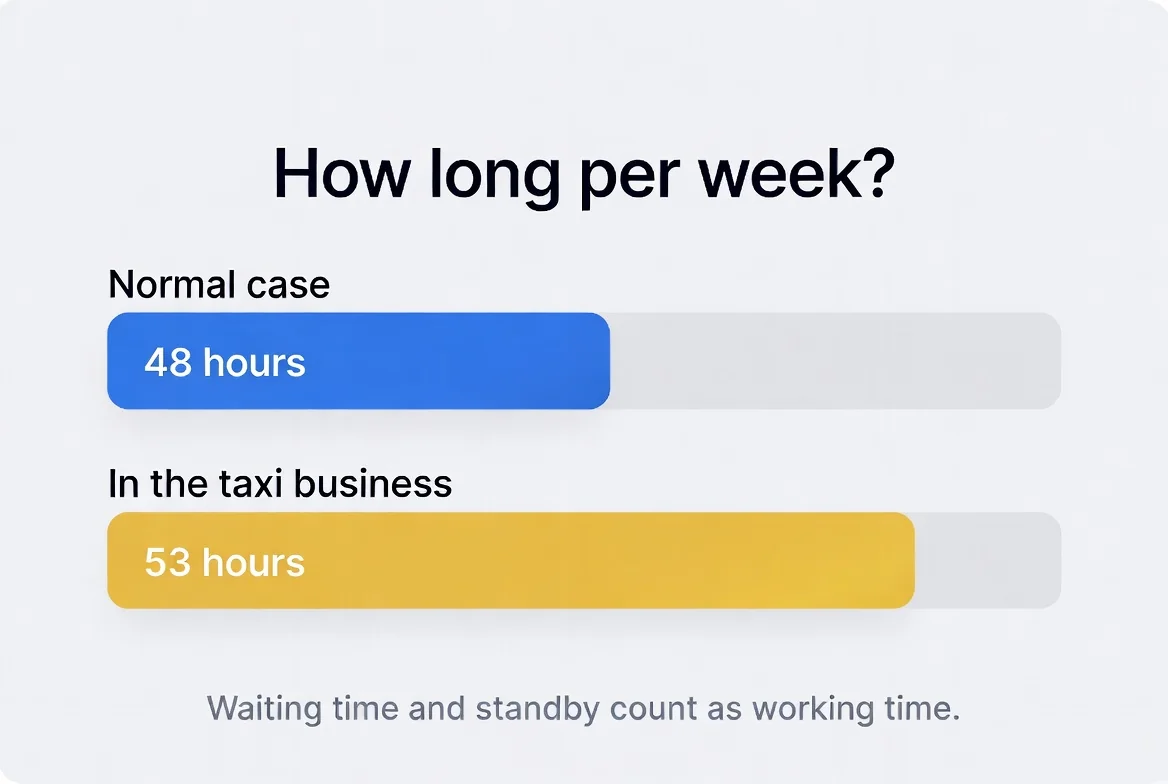
Working hours, driving time & rest periods
Weekly working time, overtime, driving time, breaks, daily rest and the free half-day.
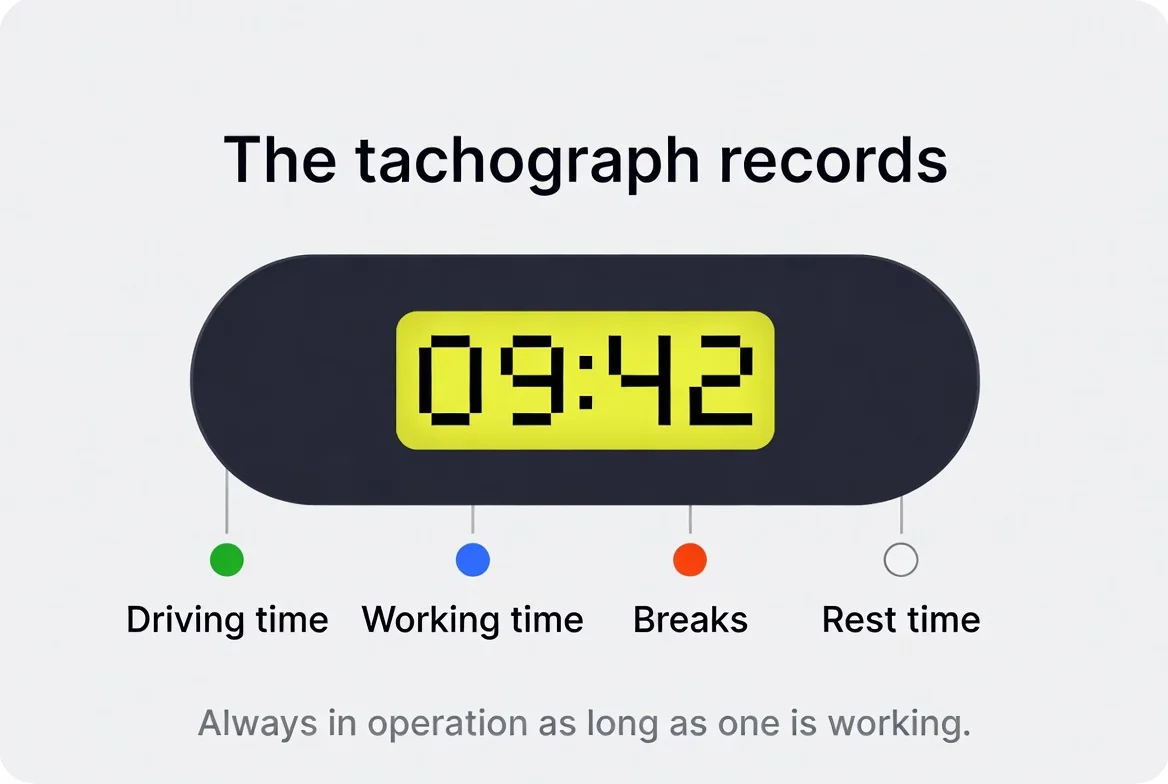
Tachograph & monitoring
Tachograph, record sheets, logbook, summary sheet and penalties.
Quick reference: the key figures
Frequently asked questions
What is the ARV 2?
The ARV 2 is the Swiss ordinance on the working and rest periods of professional drivers of light passenger transport vehicles. It governs how long taxi drivers may work and drive, when breaks are required and how much rest is needed.
What is the difference between self-employed and employed taxi drivers?
For an employed driver the total working time counts, including waiting and standby. For a self-employed driver the focus is mainly on the driving time behind the wheel. More on this under Self-employed or employed.
How long may a taxi driver work and drive per week?
The weekly working time is 48 hours, or 53 hours in a taxi company. Driving time is limited to 9 hours per day and 45 hours per week.
What is the tachograph in a taxi for?
The tachograph records when the driver was driving, working and taking breaks, so that working and rest periods can be checked. It has to run continuously during work and be operated correctly.
Study guide – simply explained. Information without guarantee; the wording of the ARV 2 is authoritative.